
Lexington Herald-Leader | News
McClatchyNews & Magazines
2.976.00 Reviews
- Version
- 11.1.16
- Installs
- 10.00K
- Age Rating
- Everyone 10+
Screenshots
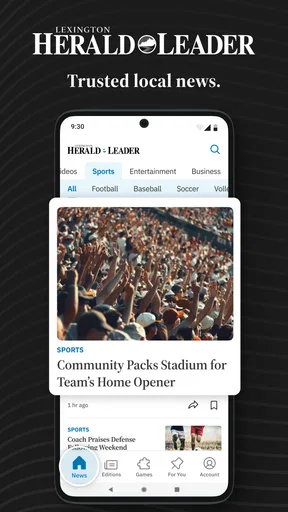
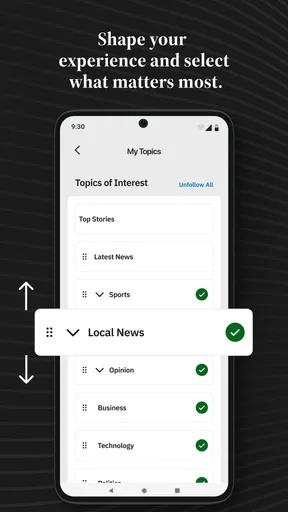
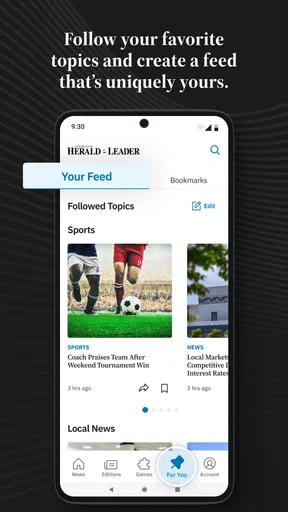
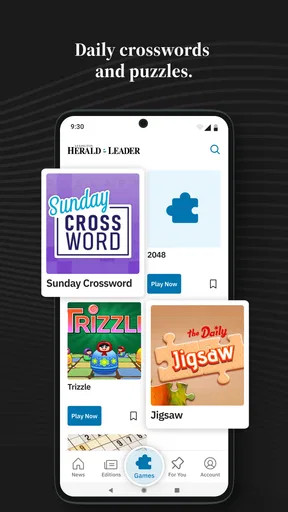
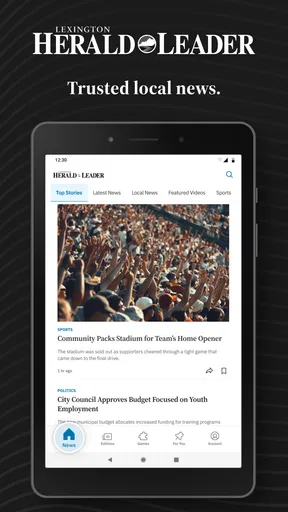
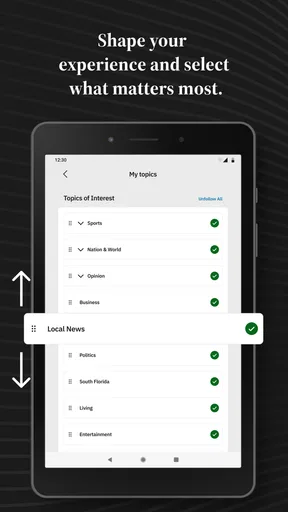
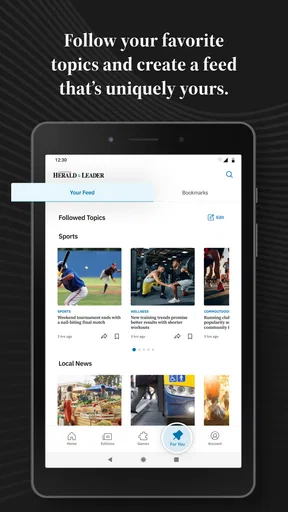
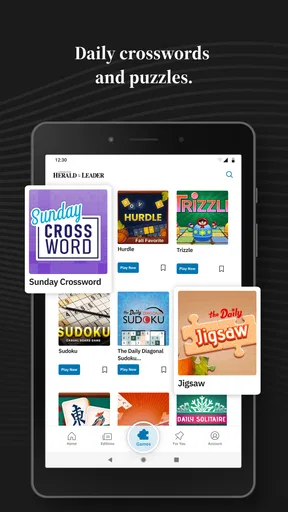
Our Review of Lexington Herald-Leader | News
 Analysis by Appyee
I spent time with Lexington Herald-Leader as a focused way to follow news connected to Eastern Kentucky, and its biggest value is also its clearest boundary: this is a local publication app, not a broad replacement for every news source on a phone. The emphasis on breaking news, politics, business, weather, and sports makes sense for readers who want regional context in one place rather than a constant stream of national headlines.
That local focus changes how I judge it. I am not looking for the enormous topic range of a general news aggregator here. I am asking whether the app helps me keep up with the area, whether its coverage is practical during an ordinary day, and whether the reading experience justifies keeping a dedicated news app installed. In my experience, it can be useful when Eastern Kentucky is the part of the news map that matters most to me, but its modest average rating of 2.9 from around 200 ratings suggests that the experience has not worked equally well for everyone.
Why the local-news focus matters
The app is developed by McClatchy and belongs to the news and magazine category. Its role is straightforward: put Lexington Herald-Leader reporting within reach on Android devices, with local stories taking priority over the broad, generalized coverage found in many national apps. That distinction is important because local information often has a different purpose. I may not need another opinion piece about a distant national story, but I may want to know what is happening with regional politics, local business activity, sports, or weather that affects plans today.
The most useful capability is therefore not simply “reading news.” It is regional filtering. By opening a publication centered on Eastern Kentucky, I can start closer to the information that has a direct effect on my community, commute, conversations, or weekend plans. That saves the mental effort of sorting through a national feed before finding something local.
I also like the way the subject mix supports different kinds of visits. A reader checking weather may have a short, practical reason to open the app. Someone following politics may stay longer and compare several stories. A sports reader might return around a game or local result. The app has a clear identity because these subjects are tied together by place rather than by a vague promise to cover everything.
That identity makes it more useful than a generic headline app for a particular kind of reader. A national aggregator can provide speed and variety, but it may bury regional reporting beneath stories selected for broad interest. Here, the local publication itself is the organizing principle. The app is strongest when location matters more than volume.
A practical way to use the coverage
I would not treat this as an app that needs to remain open all day. A better habit is to use it in short, intentional visits: once in the morning to understand the local situation, once later to catch developments, and again when a specific subject such as weather or sports becomes relevant. This approach keeps the app from becoming another endless feed and makes its regional purpose clearer.
For example, before leaving for work, I could check the latest local headlines and weather coverage, then return around lunch to see whether a political or business story has developed. In the evening, the sports section may be the reason to open it again. That routine is more efficient than repeatedly scrolling through a mixed feed where local items appear unpredictably.
A less obvious benefit is that the app can act as a starting point for conversations. Local stories often connect several subjects at once: a political decision can affect businesses, a weather event can affect sports schedules, and a business development can matter to people in nearby communities. Reading through the publication’s local lens gives those subjects a shared context that separate national apps rarely provide.
There is also a useful trade-off in keeping a dedicated local source separate from social media. Social platforms may surface a story quickly, but the surrounding context can be inconsistent, and the order of posts is shaped by engagement rather than by what is most useful to understand. A publication app gives me a more deliberate place to read the reporting itself instead of relying on fragments passed between accounts.
What the experience means for everyday reading
The app is free to install, which makes trying it fairly easy for a curious local reader. It is rated for Everyone 10+, so it is positioned for a general audience with some age guidance rather than being designed exclusively for adults. The current version is 11.1.16 and it requires Android 8.0 or later, so anyone using an older device should check compatibility before planning around it.
Its reach is still relatively limited compared with the largest mobile news services, with over 10 thousand installs. I do not see that as proof that the app lacks value; local publications naturally serve narrower audiences than global aggregators. I do read the figure as a reminder that this is a specialized tool. It is built for people who have a reason to follow this region, not for someone searching for the biggest possible community of users or the widest possible selection of sources.
The app’s store short description identifies it simply as Lexington Herald-Leader, which is useful because it avoids confusion with a general McClatchy news hub. I know what publication I am opening and what kind of coverage to expect. That clarity matters when I am choosing between several news apps during a busy morning.
The best scenario: staying oriented during a changing local day
The strongest use case is a day when local conditions may change and I need a regional source I can revisit. Imagine planning errands, following a local political development, and keeping an eye on sports or weather at the same time. A national news app might cover one part of that day, while social media might produce scattered updates. Lexington Herald-Leader gives me one publication-centered place to check for the local angle across those subjects.
In that scenario, I would use the app as a checkpoint rather than as my only source. I would read the headline that explains what changed, open the related coverage when I need more context, and then return later instead of constantly refreshing. This is especially useful for readers who want to stay informed without spending their entire day inside a news feed.
Another strong scenario is for someone who has moved away from the area but still has family, work, or personal interests connected to Eastern Kentucky. A national service may mention major events only when they become widely significant. A local publication is more likely to make the region itself the subject. That can help an absent resident maintain a sense of what is happening back home.
It can also suit students, local professionals, and community-minded readers who want to understand more than national headlines. For them, the value is not just speed. It is the chance to see politics, business, weather, and sports as parts of the same regional picture. I would recommend it most confidently in this situation: the reader already knows that Eastern Kentucky coverage is something they will check regularly.
Where the trade-offs become noticeable
The same specialization that makes the app useful can make it feel narrow. If I want technology news, international reporting, entertainment, or a wide range of national analysis, I need another source. This is not a flaw in the local mission, but it does affect whether the app earns a permanent place on my home screen. Readers who want one app to cover every interest may find a broad aggregator more convenient.
The average rating of 2.9 shows that the app has room to improve from the user’s point of view. I would not ignore that signal, especially if I expect a perfectly smooth experience. A lower average can reflect different frustrations among users, but it is enough reason to test the app personally before depending on it as my only way to receive important local information.
There is also a financial consideration. The app is free, but it includes in-app purchases ranging from $7.99 to $159.99 per item. That means “free” should be understood as free to start, not necessarily as a guarantee that every part of the reading experience will remain without a purchase. I would pay attention to any subscription or purchase prompt and decide whether the value of continued access matches how often I use the coverage.
This matters most for casual readers. If I open the app only once every few weeks, paying for access may not make sense compared with using several free sources. For a daily local-news reader, however, the calculation is different: regular, relevant reporting can be worth paying for if the available access and reading experience fit my needs. The important point is to make that decision based on frequency and local relevance, not on the download price alone.
Compared with social media, the app offers a more publication-focused reading path, but it may feel less immediate or less conversational. Compared with a national aggregator, it offers stronger regional identity but less breadth. Compared with a newspaper website in a mobile browser, a dedicated app can be more convenient to open repeatedly, while the browser may be preferable for someone who does not want another installed application. I would choose among these options based on habit: dedicated local app for regular regional reading, aggregator for variety, and browser access for occasional visits.
Small habits that make the app more useful
My first tip is to decide what I am checking before opening it. “Local headlines,” “weather,” “politics,” and “sports” are different reading tasks. Naming the task prevents me from drifting through unrelated stories and helps me judge whether the app is serving its purpose.
My second tip is to read across sections when a story affects more than one area. A weather event may have consequences for sports, businesses, and daily travel. A political story may be easier to understand when paired with local business coverage. This cross-section habit is more valuable than simply collecting headlines because it builds a fuller picture of the region.
My third tip is to use the app alongside, rather than instead of, a broader source when the stakes are high. For a major event, I would compare local reporting with official information or another reputable outlet. The local app is particularly valuable for regional detail, but no single news application should be treated as the complete answer to every urgent question.
A fourth practical insight is to judge the app over a normal week rather than after one visit. News apps can seem empty when the subjects I care about are quiet and indispensable when a local story develops. Because this one is organized around a specific region, its value depends heavily on whether that region is part of my everyday life. A short trial across different days gives me a fairer impression than a quick glance at the opening screen.
Who should install it, and who should skip it
I would recommend Lexington Herald-Leader to people who live in or closely follow Eastern Kentucky and want local reporting grouped around the subjects that affect regional life. It is especially suitable for readers who regularly check local politics, business, weather, or sports and prefer a publication-centered source over a constantly mixed national feed.
It may also be a good fit for someone trying to reduce social-media news consumption. Opening a local publication with a clear purpose can be calmer and more intentional than watching a stream of posts shaped by reactions. The app gives that reader a defined regional destination, which is a meaningful advantage when the goal is staying informed without chasing every online discussion.
I would be more cautious about recommending it to readers outside the region who want a single all-purpose news service. The local emphasis will not compensate for the narrower subject and geographic range if Eastern Kentucky is not relevant to them. I would also suggest caution for anyone unwilling to consider in-app purchases, since the free download does not mean every possible access arrangement is cost-free.
People using Android versions earlier than 8.0 should also look for another option or use a browser-based route. Even for compatible users, the reported rating means I would install it with realistic expectations and see whether its navigation, access model, and update experience suit my routine.
My final take on the local-news value
Lexington Herald-Leader succeeds when I treat it as a regional news companion rather than a universal newsstand. Its most important capability is the ability to put Eastern Kentucky at the center of the reading experience, and that has a real effect: I spend less time filtering out irrelevant national material and more time seeing the local subjects that may shape my day.
It is not the right choice for everyone. The limited geographic focus, the mixed user rating, the Android requirement, and the range of possible in-app purchase costs all deserve attention. Still, those trade-offs are easier to accept when the coverage is personally relevant. For a reader who wants a dedicated local source and plans to return regularly, the free installation makes it reasonable to try.
My recommendation is therefore specific rather than universal: install it if Eastern Kentucky is part of your life and you want a focused way to follow local developments across several subjects. Use it in short, purposeful visits, compare important information when necessary, and decide about paid access only after seeing how often the reporting genuinely helps you. For the right regional reader, its value comes from relevance, not from trying to be the biggest news app on the phone.
Verdict
Strengths of Lexington Herald-Leader | News
- Fast access to breaking news and local updates from Lexington.
- Covers Kentucky politics, sports, business, and community events.
- Clean layout makes browsing articles and sections straightforward.
- Supports personalized alerts for important regional developments.
- Useful coverage for readers who want a strong local perspective.
Limitations of Lexington Herald-Leader | News
- Some articles may require a subscription or digital membership.
- Advertising can interrupt reading, especially on heavily monetized pages.
- Push notifications may feel frequent unless carefully customized.
- Coverage is focused on Lexington and may feel limited for nonlocal readers.
- App performance and loading times can vary with connection quality.
Other Releases by McClatchy
View All
Fort Worth Star-Telegram News
News & Magazines3.0

The Charlotte Observer | News
News & Magazines2.7

Sacramento Bee News California
News & Magazines3.1

Kansas City Star | Local News
News & Magazines2.8
Similar Picks in This Category
View All
Google News - Daily Headlines
Google LLC4.0

X
X Corp.4.8

Flipboard:Your Social Magazine
Flipboard3.4

Opera News: breaking & local
Opera4.5

Hindi News by Dainik Bhaskar
Dainik Bhaskar Group4.0

Way2News Daily News App
Way2News ( Formerly Way2SMS )4.6
Frequently Asked Questions
What is the Lexington Herald-Leader | News app?
The Lexington Herald-Leader | News app is a mobile way to read local and regional journalism from Lexington, Kentucky, and surrounding communities. It typically brings together breaking news, politics, education, business, sports, entertainment, opinion, and community coverage in one place. The app is designed for readers who want convenient access to Herald-Leader reporting while away from a desktop browser.
Is the Lexington Herald-Leader app free to download and use?
The app can generally be downloaded without an upfront charge, but access to all articles and features may depend on the publication’s subscription policy. Some stories may be available to everyone, while frequent reading, premium journalism, eEdition access, or unlimited article viewing may require a paid subscription. Before downloading, check the current App Store or Google Play listing and the publisher’s terms for pricing and trial details.
What type of news and content can I read in the app?
Readers can expect coverage focused on Lexington and Kentucky, including local government, crime, schools, sports, business, health, events, and community developments. Depending on the current app version and subscription plan, it may also include opinion columns, photo galleries, videos, newsletters, alerts, and an eEdition that resembles the printed newspaper. Available sections can change as the publisher updates its digital offering.
Does the app send breaking-news notifications?
The app may support push notifications for breaking news, major local developments, sports updates, and other important headlines. Notification settings are usually controlled both inside the app and through your phone’s operating-system settings, so you can decide what you receive. If you prefer fewer interruptions, you can disable alerts entirely or allow only the categories that matter most to you.
Does the app work offline or require an internet connection?
An internet connection is normally required to load current articles, images, videos, advertisements, and live updates. Some content may remain temporarily available through app caching, and an eEdition or saved material could offer limited offline reading, but this should not be assumed for every story. For the most reliable experience, use Wi-Fi or a stable mobile-data connection and keep the app updated.
